Innovative solutions to minimize electrolysis stack degradation and green hydrogen production costs
IRAUNKOR
Context
The deployment of the renewable hydrogen market will largely depend on the levelized cost of hydrogen (LCOH). To reduce this, it is essential to improve electrolyzer efficiency and reduce component degradation, which has a significant impact on performance and service life.
Under intermittent operating conditions, such as in systems coupled to renewable energy, the efficiency and durability of electrolyzers are greatly affected and depend largely on the design and components of the stack, as well as the operating conditions.
CHALLENGE
IRAUNKOR seeks to exhaustively investigate the impact of operating conditions on the degradation of low-temperature stacks throughout their service life using standardized protocols.
The knowledge of degradation parameters acquired during the project will enable the development of innovative solutions that minimize such degradation, making green hydrogen production possible at a competitive cost.
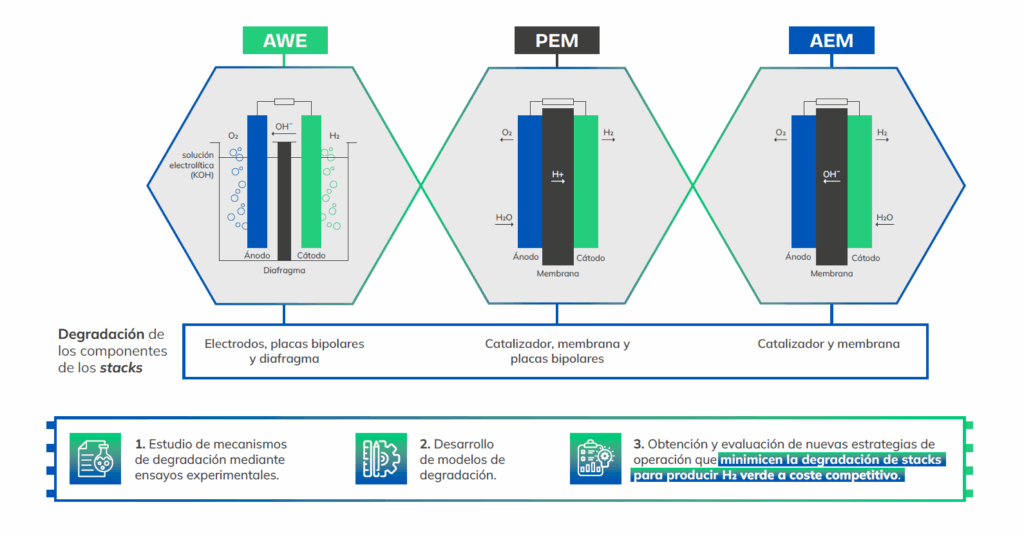
Critical Parameters and Degradation Mechanisms
Critical Parameters
- High current densities
- Frequent starts and stops
- Current fluctuation
- Load ramps
Degradation Mechanisms
- Anodic and cathodic polarization
- Component leaching
- Active site limitation
- Passivation
- Dissolution
- Precipitate formation
- Reverse currents
Areas of Action
EXPECTED RESULTS
- Stack degradation testing protocols
- Analysis of the impact of operating parameters on stacks
- Degradation models under realistic conditions
- Optimal operating strategies for each technology
Consortium Capabilities
AWE
Stack 1:
- Power: 0.9 kW
- Active area: 177 cm
- Number of cells: 5
- Total flow: 60 L/h
- Nominal current density: 0.3 A/cm^2
- Pressure: < 8 bar
Stack 2:
- Power: 3 kW
- Active area: 500 cm2
- Number of cells: 5
- Total flow: 100 L/h
- Nominal current density: 0.4 A/cm^2
- Pressure: 30 bar
PEM
Stack 1:
- Power: 0.125 kW
- Active area: 25 cm2
- Number of cells: 5
- Total flow: 60 L/h
- Nominal current density: 1 A/cm^2
- Pressure: < 6 bar
Stack 2:
- Power: 8.5 kW
- Active area: 400 cm2
- Number of cells: 5
- Total flow: 100 L/h
- Nominal current density: 3 A/cm^2
- Pressure: 30 bar
AEM
Stack:
- Power: 1kW
- Active area: 80 cm2
- Number of cells: 6
Total flow: 180 L/h - Nominal current density: 1 A/cm^2
- Pressure: 0-16 bar
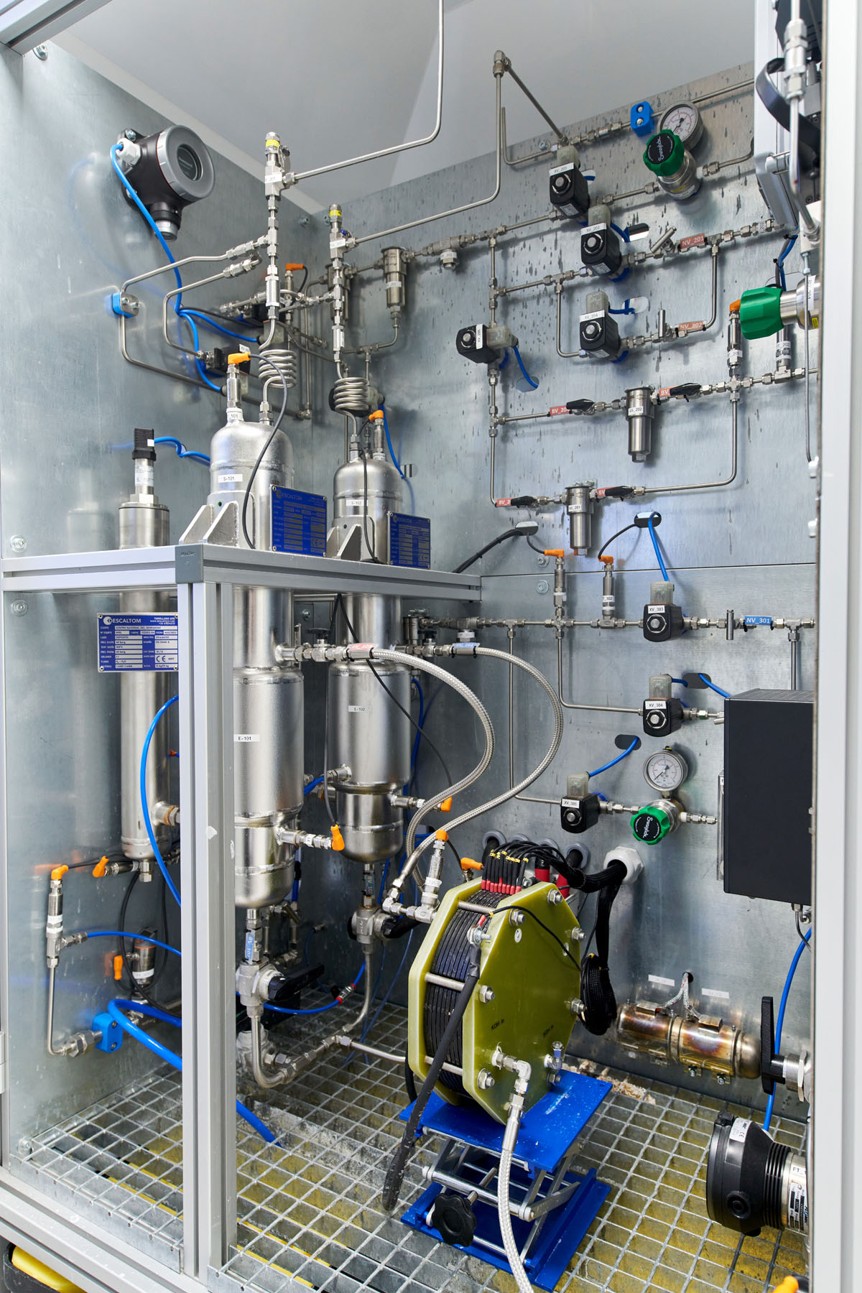
Test Infrastructure
Bench:
- Maximum power: 5 kW
- Maximum current: 500 A
- Maximum voltage: 15 V
- Maximum pressure: 30 bar
- Maximum temperature: 90°C
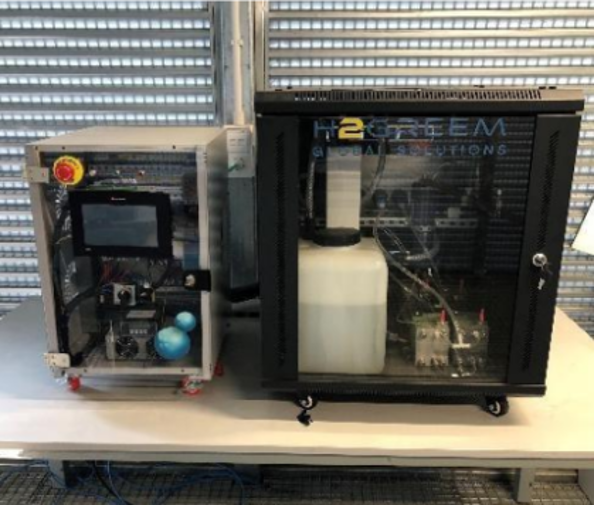
Double hydraulic circuit connected and/or separate
Bench 1:
- Maximum power: 0.5 kW
- Maximum current: 30 A
- Maximum voltage: 60 V
- Maximum pressure: 6 bar
- Maximum temperature: 80°C
- Up to 4 stacks with hydraulic circuit connected between 2 stacks and/or individual electrical circuit per stack
Bench 2:
- Maximum power: 25 kW
- Maximum current: 200 A
- Maximum voltage: 60 V
- Maximum pressure: 30 bar
- Maximum temperature: 120°C
Up to 3 stacks with individual hydraulic and/or electrical circuit per stack
Bench:
- Maximum power: 2.4 kW
- Maximum current: 200 A
- Maximum voltage: 12 V
- Maximum pressure: 25 bar
- Maximum temperature: 90°C
- Up to 6 cells with individual control
- Dry and/or wet cathode
- Single cells of 5, 25 and/or 100 cm^2
LATEST NEWS
IRAUNKOR News
CONSORTIUM
Advisory Committee